
Content Writer
Nov 20, 2026
35 Views
0 Comments
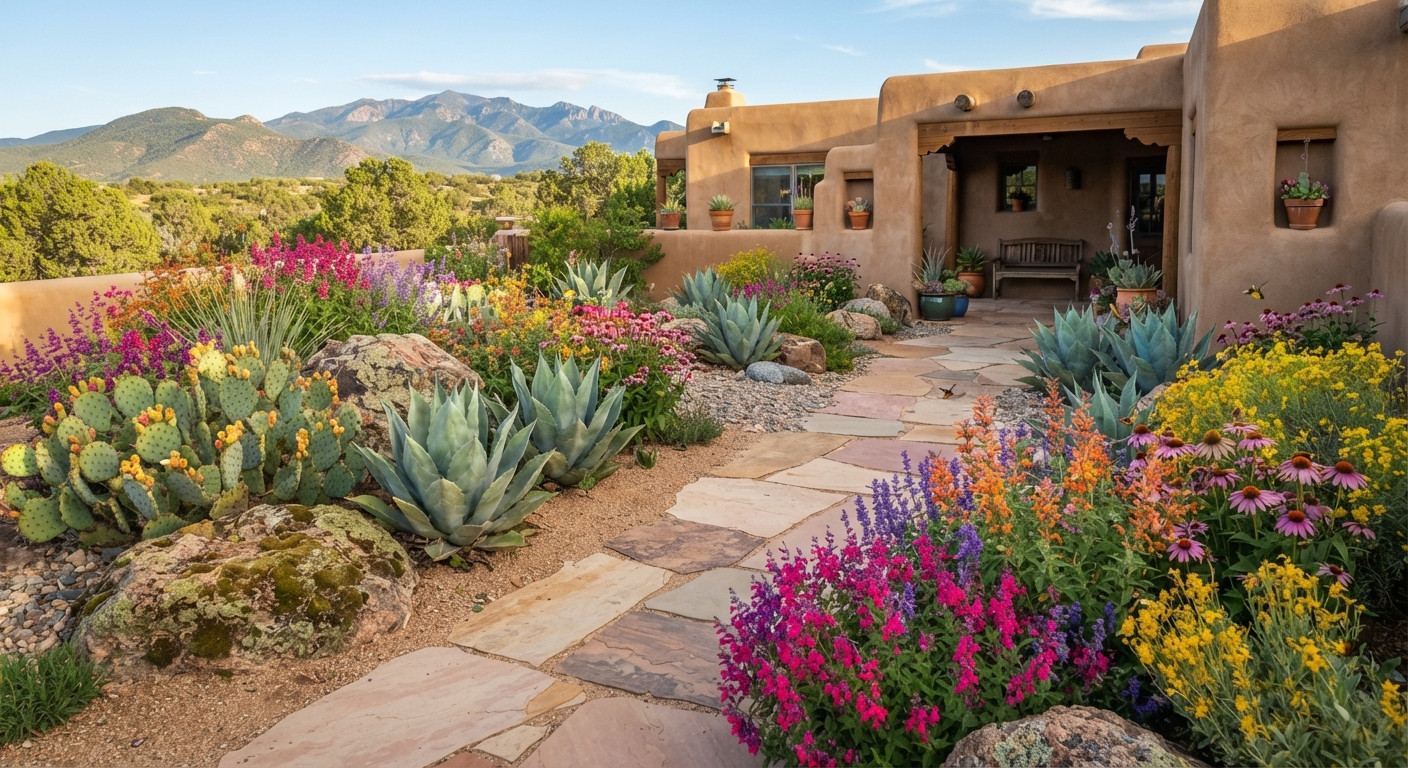
Xeriscaping in Santa Fe, New Mexico, has moved far beyond the outdated notion that saving water means settling for monochromatic yards covered solely in gray gravel. In the unique environment of the region's high desert, it is entirely possible to design vibrant, dynamic gardens bursting with life year-round without compromising water conservation. The secret lies in the strategic combination of architectural textures and natural pops of color that thrive under the intense sun and temperature swings of the Sangre de Cristo Mountains.
The foundation of a successful Santa Fe landscape starts with native and adapted plants that bring structure and character, such as agaves and prickly pears. These species not only withstand drought and winter freezes, but also offer foliage tones ranging from blue-green to deep purple, alongside bright yellow, orange, and magenta blooms in spring and summer. By weaving these succulents among hardy pollinator plants—like Russian sage, hummingbird mint (agastache), chamisa, and coneflowers—a yard transforms into a thriving ecosystem that attracts native bees, butterflies, and hummingbirds, delivering constant color and movement without heavy watering.
To tie this botanical palette into Santa Fe's traditional adobe architecture, natural stone elements play a vital role. Incorporating moss rock beds creates organic transitions that mimic the natural rocky outcrops of local foothills, while also helping to retain soil moisture and insulate plant roots. Pairing these beds with flagstone patios provides functional, cool outdoor living spaces that blend seamlessly into the surrounding terrain, achieving an ideal balance of rustic elegance, low maintenance, and respect for the high desert's natural resources.
Category:
Landscaping
0 Comments
There are no comments on this article yet. Be the first to comment!
Leave a Reply
Your email address will not be published. Required fields are marked *