
Content Writer
Nov 09, 2026
16 Views
0 Comments
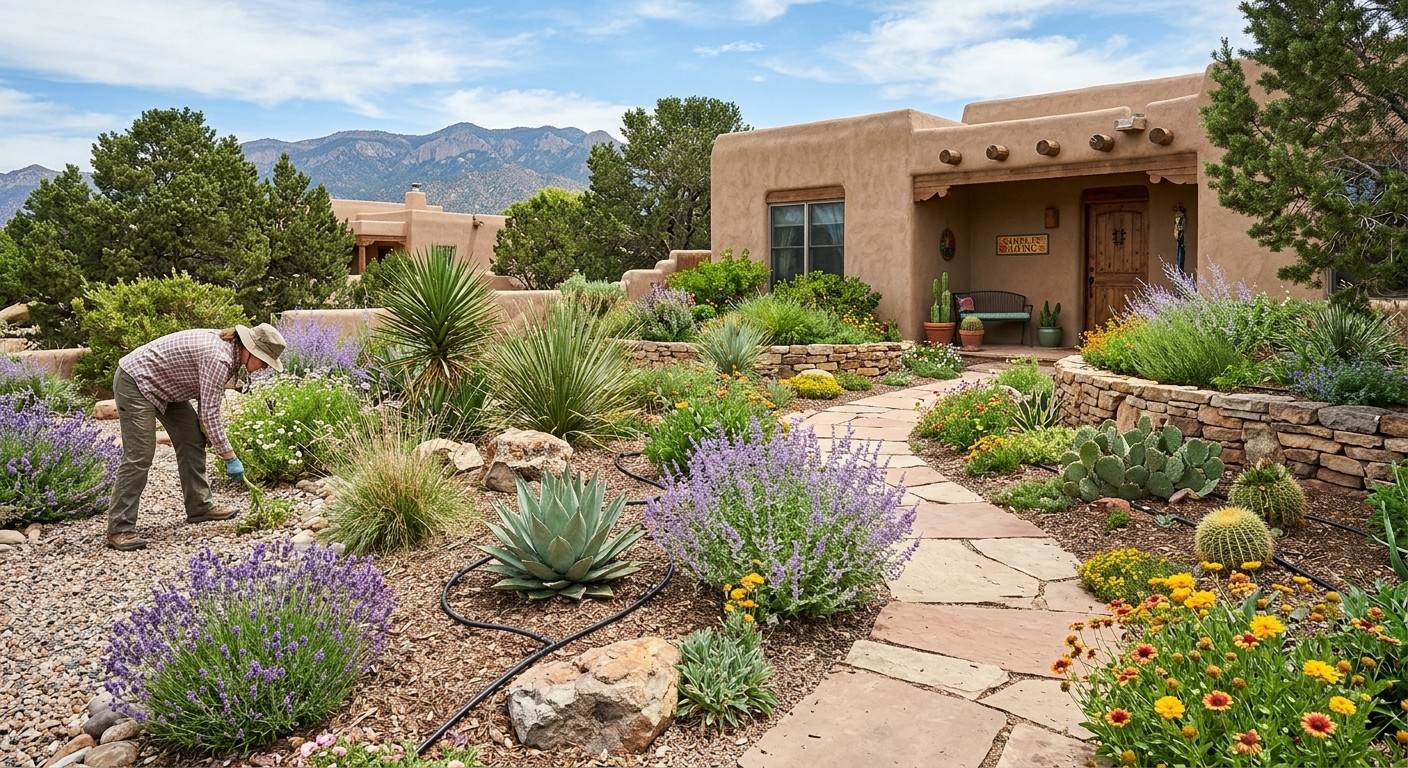
Landscaping in Santa Fe, New Mexico, requires a conscious approach that respects the high-desert environment and iconic Pueblo-style architecture. Designing a garden in this region involves selecting native and drought-tolerant plants—such as Russian sage, piñon pines, cacti, and native grasses—that thrive despite extreme temperature fluctuations. Incorporating hardscaping elements like gravel, local river rock, and stone pathways complements the desert aesthetic while suppressing weeds and preventing soil erosion caused by seasonal mountain winds.
Given Northern New Mexico's arid climate and regional water restrictions, an efficient irrigation system is essential to keep landscapes thriving without wasting resources. High-efficiency drip irrigation paired with smart timers delivers precise moisture directly to plant roots during the cooler early morning hours, drastically minimizing evaporation. Additionally, rainwater harvesting systems and strategic land grading allow homeowners to capture and utilize natural runoff from the summer monsoon rains.
Seasonal maintenance is critical for protecting your outdoor space against Santa Fe's distinct weather patterns. In early spring, applying a fresh layer of organic mulch or fine gravel insulates roots against late frosts and locks in moisture ahead of the dry summer months. During autumn, strategic pruning of shrubs and deep-watering trees ensures vegetation can withstand the freezing winter temperatures typical of the Sangre de Cristo foothills.
Consistent, eco-friendly upkeep maintains visual appeal while supporting the local ecosystem by attracting hummingbirds and native pollinators. Regularly checking drip lines for leaks, managing weeds through organic methods, and amending the alkaline soil with organic compost ensure long-term plant health. Balancing traditional Southwest design with modern sustainable practices yields a vibrant, resilient outdoor living space that thrives year-round.
Category:
Landscaping
0 Comments
There are no comments on this article yet. Be the first to comment!
Leave a Reply
Your email address will not be published. Required fields are marked *