Editor
Oct 27, 2026
12 Views
0 Comments
Instead of focusing on traditional planting, flagstone hardscaping, or lighting, this topic covers a key structural feature that solves a common high-desert challenge: managing sudden rainwater runoff and soil erosion.
The Functional Beauty of a Dry Riverbed
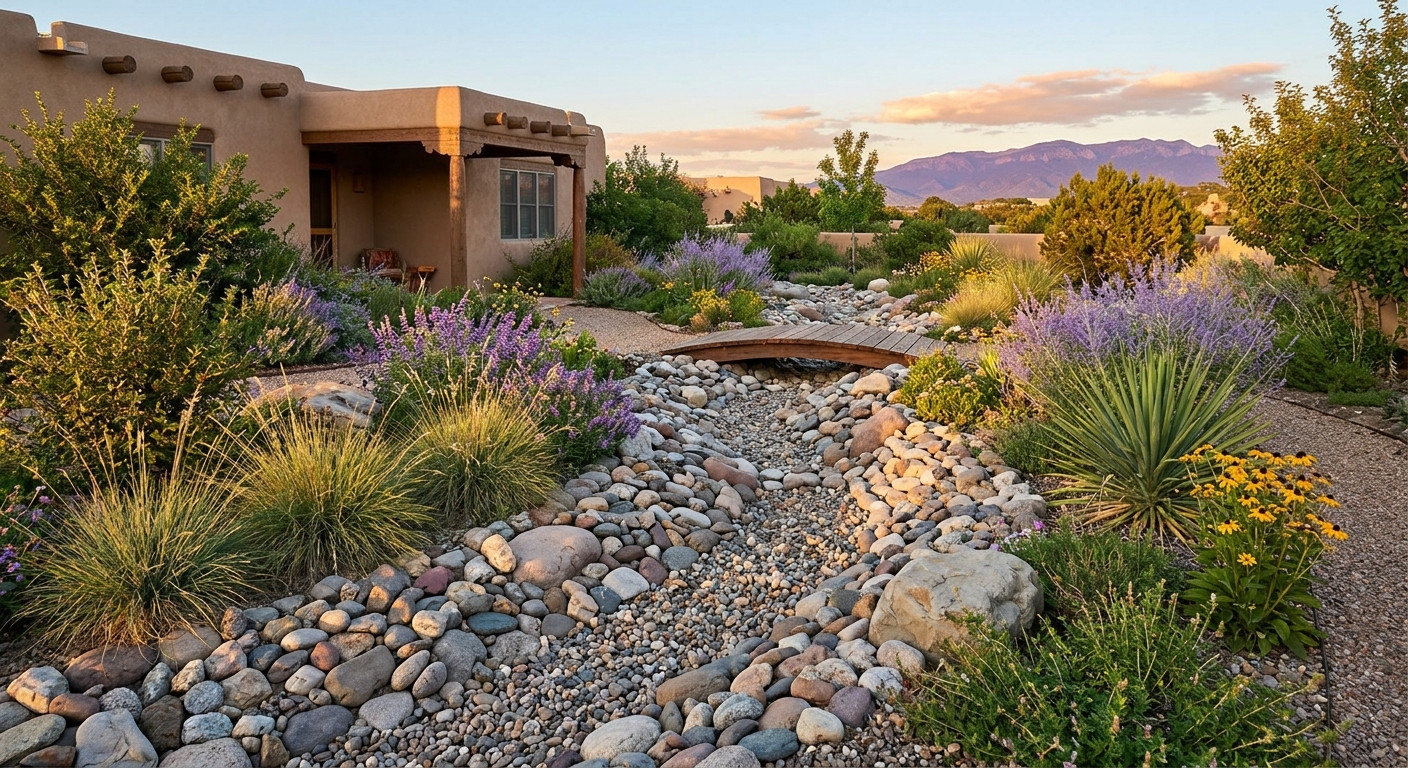
In arid, high-altitude regions like Santa Fe and Northern New Mexico, rainfall often arrives abruptly through brief yet intense storms. A dry creek bed—a sculpted pathway lined with river rocks, gravel, and natural boulders—mimics the look of a natural stream when dry, while serving a crucial drainage purpose during heavy downpours.
Key Benefits of Incorporating a Dry Creek Bed:
Erosion Control & Smart Drainage:
Safely channels heavy rainwater runoff away from home foundations, patios, and walkways without relying on exposed PVC pipes or artificial drainage channels.
Textural Contrast & Visual Motion:
Breaks up flat gravel expanses by introducing organic curves, varied rock dimensions, and natural earth tones that complement Southwestern outdoor design.
Infiltration & Soil Moisture Retention:
Unlike solid concrete channels, the porous stone layer slows down water flow, giving it time to soak into the soil and nourish surrounding plant root systems.
Microclimates for Native Flora:
The edges of a dry creek bed create ideal microclimates for drought-tolerant native species like ornamental grasses, sage, and lavender, which thrive on the residual moisture retained beneath the stones.
0 Comments
There are no comments on this article yet. Be the first to comment!
Leave a Reply
Your email address will not be published. Required fields are marked *