
Editor
Sep 30, 2026
90 Views
0 Comments
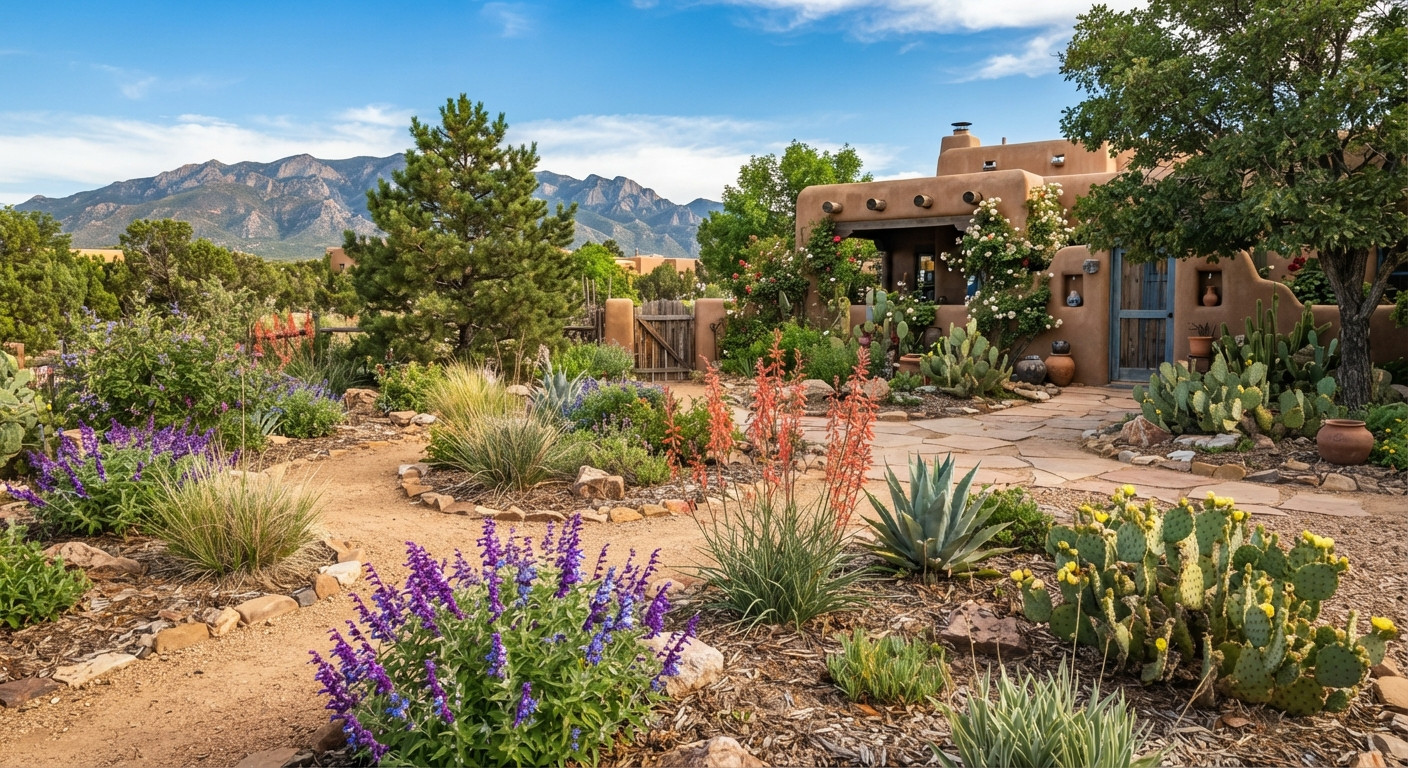
Designing a garden in Santa Fe, New Mexico, is an art form. Situated at about 7,000 feet (2,100 meters) above sea level, this beautiful city features a semi-arid high-desert climate with cold winters, warm summers, and a distinct summer monsoon season. Combined with the vital need for water conservation, xeriscaping becomes the absolute best approach for the region.
If you are looking to transform your outdoor space, here is a curated selection of plants perfectly adapted to Santa Fe's soil, altitude, and climate.
1. Trees and Shrubs (Structure and Shade)
Large shrubs and trees form the backbone of any garden. In Santa Fe, the key is to choose species that can handle both winter freezes and dry spells.
Pinyon Pine (Pinus edulis): The iconic state tree of New Mexico. Slow-growing and rustic, it adapts wonderfully to dry, well-draining soils and offers a classic woodland feel.
Gambel Oak (Quercus gambelii): A native oak providing wonderful summer shade and stunning golden-orange foliage in the fall.
Apache Plume (Fallugia paradoxa): A tough, resilient shrub featuring white, wild-rose-like flowers followed by decorative, feathery pink seed heads.
Autumn Sage (Salvia greggii): An absolute must-have in Santa Fe. Its tubular flowers (in shades of red, pink, or purple) are a magnet for hummingbirds and bloom reliably all summer long.
2. Perennials and Vibrant Flowers (Long-Lasting Color)
To avoid high-water annuals, native perennials are your best bet. They return year after year and thrive in the region's lean soils.
Penstemon (Penstemon spp.): Gorgeous local varieties like Palmer's Penstemon (Penstemon palmeri) or Scarlet Bugler (Penstemon eatonii) add striking vertical spikes of red or pink flowers.
Red Yucca (Hesperaloe parviflora): Despite the name, it often blooms in coral and soft pink tones. Its architectural, sword-like leaves give a modern desert feel and handle extreme drought with ease.
Chocolate Flower (Berlandiera lyrata): A charming plant whose bright yellow blossoms release a subtle, comforting scent of milk chocolate in the mornings.
Black-Eyed Susan (Rudbeckia hirta): Cheerful yellow petals and dark centers attract pollinators and bring a warm, golden glow to garden beds.
3. Succulents and Ornamental Grasses (Texture and Movement)
Contrasting textures are key to adding dynamism to an arid-climate landscape.
Prickly Pear Cactus (Opuntia) and Agaves: They act as living sculptures in the garden. Cold-hardy agaves blend seamlessly into the northern New Mexico aesthetic.
Native Ornamental Grasses: Options like Sideoats Grama (Bouteloua curtipendula) add soft movement in the breeze and require almost no supplemental water once established.
Key Tips for Garden Success in Santa Fe
Harvest Rainwater: Design slight depressions or swales in your landscaping to capture summer monsoon runoff, allowing it to slowly soak into the soil near plant roots.
Skip the Heavy Fertilizer: Santa Fe's native plants are adapted to lean, sandy soils. Over-fertilizing can actually weaken them and encourage leggy, weak growth.
Use Mulch: Apply crushed rock or gravel mulch around your plants to help retain soil moisture and prevent weeds.
Embracing local flora will not only lower your water bill and maintenance time, but it will also create a natural sanctuary that honors the authentic beauty of the New Mexico landscape..
If you are looking to transform your outdoor space, here is a curated selection of plants perfectly adapted to Santa Fe's soil, altitude, and climate.
1. Trees and Shrubs (Structure and Shade)
Large shrubs and trees form the backbone of any garden. In Santa Fe, the key is to choose species that can handle both winter freezes and dry spells.
Pinyon Pine (Pinus edulis): The iconic state tree of New Mexico. Slow-growing and rustic, it adapts wonderfully to dry, well-draining soils and offers a classic woodland feel.
Gambel Oak (Quercus gambelii): A native oak providing wonderful summer shade and stunning golden-orange foliage in the fall.
Apache Plume (Fallugia paradoxa): A tough, resilient shrub featuring white, wild-rose-like flowers followed by decorative, feathery pink seed heads.
Autumn Sage (Salvia greggii): An absolute must-have in Santa Fe. Its tubular flowers (in shades of red, pink, or purple) are a magnet for hummingbirds and bloom reliably all summer long.
2. Perennials and Vibrant Flowers (Long-Lasting Color)
To avoid high-water annuals, native perennials are your best bet. They return year after year and thrive in the region's lean soils.
Penstemon (Penstemon spp.): Gorgeous local varieties like Palmer's Penstemon (Penstemon palmeri) or Scarlet Bugler (Penstemon eatonii) add striking vertical spikes of red or pink flowers.
Red Yucca (Hesperaloe parviflora): Despite the name, it often blooms in coral and soft pink tones. Its architectural, sword-like leaves give a modern desert feel and handle extreme drought with ease.
Chocolate Flower (Berlandiera lyrata): A charming plant whose bright yellow blossoms release a subtle, comforting scent of milk chocolate in the mornings.
Black-Eyed Susan (Rudbeckia hirta): Cheerful yellow petals and dark centers attract pollinators and bring a warm, golden glow to garden beds.
3. Succulents and Ornamental Grasses (Texture and Movement)
Contrasting textures are key to adding dynamism to an arid-climate landscape.
Prickly Pear Cactus (Opuntia) and Agaves: They act as living sculptures in the garden. Cold-hardy agaves blend seamlessly into the northern New Mexico aesthetic.
Native Ornamental Grasses: Options like Sideoats Grama (Bouteloua curtipendula) add soft movement in the breeze and require almost no supplemental water once established.
Key Tips for Garden Success in Santa Fe
Harvest Rainwater: Design slight depressions or swales in your landscaping to capture summer monsoon runoff, allowing it to slowly soak into the soil near plant roots.
Skip the Heavy Fertilizer: Santa Fe's native plants are adapted to lean, sandy soils. Over-fertilizing can actually weaken them and encourage leggy, weak growth.
Use Mulch: Apply crushed rock or gravel mulch around your plants to help retain soil moisture and prevent weeds.
Embracing local flora will not only lower your water bill and maintenance time, but it will also create a natural sanctuary that honors the authentic beauty of the New Mexico landscape..
0 Comments
There are no comments on this article yet. Be the first to comment!
Leave a Reply
Your email address will not be published. Required fields are marked *